


In medical device manufacturing, the intersection of complex geometry and uncompromising material integrity is where projects succeed or fail. While CNC machining and Metal Injection Molding (MIM) have their place, stainless steel precision casting (investment casting) remains the industry benchmark for surgical grade components.
For R&D engineers and procurement heads, selecting this process isn't just about shaping metal-it's about ensuring biocompatibility,corrosion resistance, and long-term sterilization stability.
In clinical environments, "failure" isn't just a mechanical break; it's a surface that harbors bacteria or an alloy that leaches ions into a patient.Stainless steel precision casting allows for the use of high-purity alloys that meet the rigorous demands of both the operating room and the autoclave.
When we discuss "Medical Grade," we are specifically referring to compliance with standards such as ASTM F899 (Standard Specification for Wrought Stainless Steels for Surgical Instruments). Precision casting ensures that the metallurgical chemistry-specifically Carbon, Chromium, and Nickel levels-is tightly controlled to meet these regulatory benchmarks.
Unlike subtractive manufacturing, precision casting utilizes a ceramic shell built around a wax pattern. This allows for the fabrication of "near-net-shape"components that are 90-95% complete upon exiting the mold.
Reduced Waste: While CNC machining can turn 70% of a surgical-grade block into scrap chips, casting uses only the material required for the part and the gating system.
Consolidated Assemblies: Casting allows you to combine three machined parts into one single, seamless component, eliminating "bacteria traps" at joints and seams-a critical factor in infection control.
Casting vs. Metal Injection Molding (MIM)
MIM excels at small, high-volume parts (<100g, >50k units/year). But investment casting is better in three common medical device scenarios:
Size – MIM is limited to small components; casting scales to larger instruments and brackets without tooling redesign.
Alloy flexibility – MIM uses a narrow range of pre-mixed powders; casting works with any pourable alloy, including custom heats for ASTM implant grades.
Low-to-mid volume economics – MIM tooling and feedstock costs only pay off at high volumes. For 500–20,000 units/year, investment casting delivers lower total cost with equal accuracy.
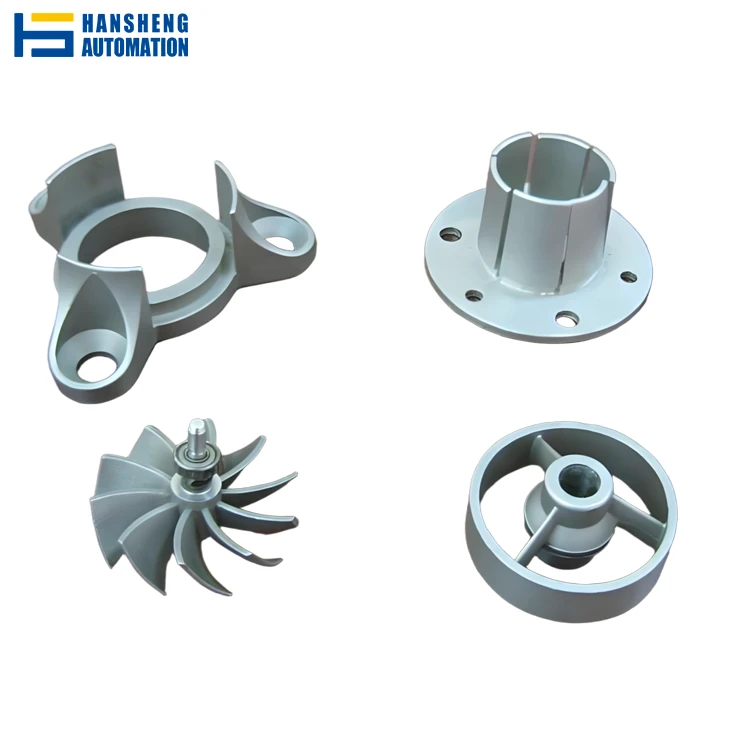
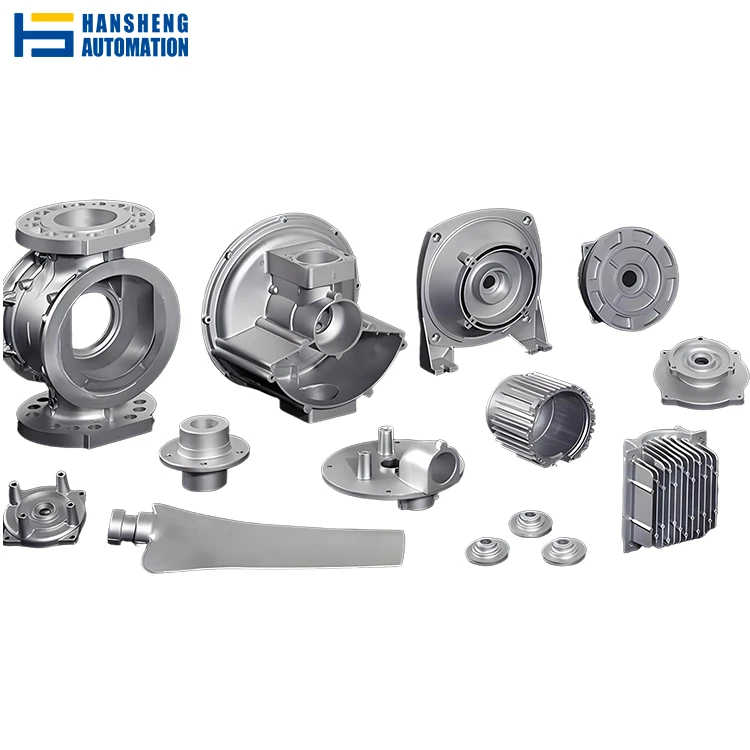
Choosing the right alloy impacts everything from edge retention to magnetic interference in MRI environments.
316L (ASTM F138 / F139) – The Corrosion Expert
316L is the "Low Carbon" variant of 316. The addition of Molybdenum provides exceptional resistance to pitting in saline environments. It is the gold standard for implants and instruments that stay in contact with the human body.
17-4PH (AISI 630) – High Strength & Hardness
For instruments that require a sharp cutting edge or high torque resistance-such as bone saws, drills, or forceps-17-4PH is preferred. It is a
precipitation-hardening grade that offers a superior balance of mechanical toughness and oxidation resistance.Technical Comparison: Medical Alloys
|
304 Stainless |
316L Stainless |
17-4PH Stainless |
|
|
ASTM A351 (CF8) |
ASTM F138 / F139 |
ASTM A564 (H900) |
|
|
15-20 HRC |
20-25 HRB |
38-45 HRC |
|
A common misconception is that casting and machining are "either/or" choices. In the medical sector, the most cost-effective parts are Cast-and-Machined.
Near-Net-Shape Efficiency: We cast the complex ergonomic handle and internal cavities, then use CNC machining only for high-precision mating surfaces or threaded holes.
Surface Finish (Ra Values): Medical parts typically require an Ra 0.4 to 0.8 finish. Through a combination of , centrifugal tumbling,and electropolishing, we achieve surfaces that are non-porous and easy to disinfect.
protective chromium-oxide layer.
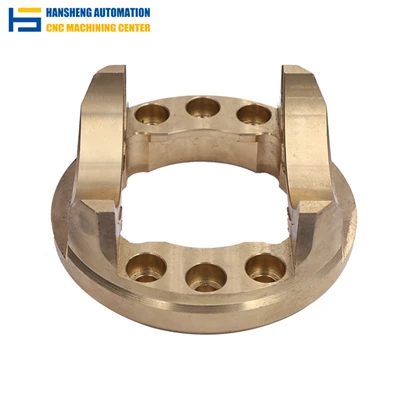
Real-World Medical Applications
Surgical Instrumentation: Forceps, needle holders, and retractor blades where ergonomic "feel" and weight balance are vital.
Orthopedic Trials: Temporary implants used by surgeons to test sizing before the final permanent implant is placed.
Diagnostic Hardware: High-strength structural brackets for X-ray and CT-scan gantries that require non-magnetic properties.
A "cheap" casting becomes expensive when it fails an FDA audit. Ensure your manufacturing partner adheres to:
ISO 13485
The Quality Management System (QMS) specifically for medical devices.
Every casting must be traceable back to the original heat number of the steel.
Non-Destructive Testing (NDT):X-Ray/Radiography
To detect internal gas porosity or shrink defects.
To ensure no surface-level cracks are present that could harbor pathogens.
To lower your cost-per-part, consider these "shop floor" insights during your design phase:
Aim for a minimum of 1.5mm to 2.0mm to ensure proper metal flow in stainless alloys.
While investment casting requires less draft than sand casting, a 0.5-degree angle can significantly improve wax pattern removal.
Avoid sharp internal corners. Adding a radius improves the structural integrity of the ceramic mold and the final part.
A: Yes, but grade selection is vital. 316L is generally non-magnetic, whereas 17-4PH is magnetic.We recommend 316L for parts used in proximity to imaging equipment.
A: Through controlled chemistry and proper passivation. We ensure the Chromium and Molybdenum levels are on the high end of the allowable range to maximize the passive layer's
strength.
A: Using 3D-printed wax patterns (Rapid Prototyping), we can deliver functional metal samples in 2-3 weeks, bypassing the need for permanent aluminum tooling during the R&D phase.
Q: What does ISO 13485 require from a casting supplier and why does it matter?
A: ISO 13485 requires material traceability, batch inspection records, and a formal corrective action process. For procurement, certification is accepted by FDA and EU MDR as proof of a controlled environment. Always verify the supplier's certificate scope - some hold it only for specific product lines.
A: Lock final geometry and alloy before hard tooling. Use the same alloy specification and post-processing (passivation, NDT) as production. This makes prototype data comparable, shortening FDA V&V. Suppliers with PPAP or AS9102 FAI can provide the needed documentation directly.
Q: Can investment-cast stainless steel be used in single-use surgical instruments?
A: Yes, but economics differ. For reusable, casting's autoclave durability justifies tooling. For single-use, only cost-effective above ~20,000 units/year. Casting wins when geometry is too complex for stamping and MIM cannot meet wall thickness - here geometric freedom outweighs tooling cost.
For medical components that demand controlled alloy chemistry, complex near-net-shape geometry, and full regulatory traceability, stainless steel investment casting consistently outperforms alternative processes on total cost of ownership - particularly in the 500 to 50,000 unit volume range where MIM tooling costs are prohibitive and CNC machining waste becomes unsustainable.
By leveraging "near-net-shape" production and targeted CNC machining, manufacturers can achieve superior part performance while maintaining a competitive cost structure.
Need a technical review of your medical component design? Contact our engineering team to discuss material specs and DFM optimizations.